❄️ Do Snow Games Really Lower Scoring? The Truth About Cold-Weather Football

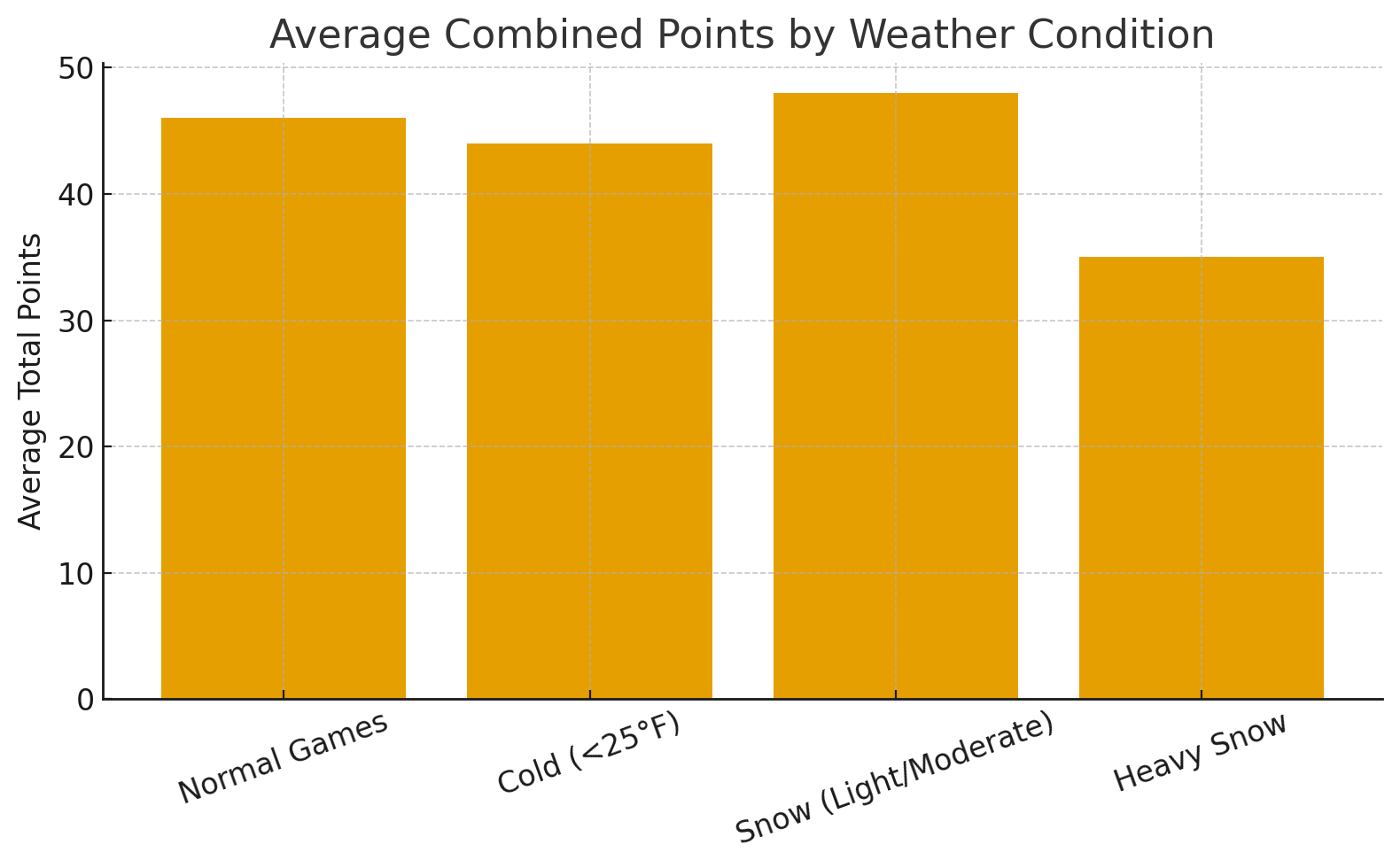
When football fans imagine snow-covered fields and freezing temperatures, they often assume scoring will plummet and offenses will struggle. But the real data tells a different story. In fact, snow games — and even extremely cold temperatures — can create surprisingly explosive offensive performances.
Let’s take a closer look at how snow and temperatures below 25°F actually impact NFL scoring and fantasy football production.
❄️ Snow Doesn’t Slow Offenses — It Often Helps Them
Light to moderate snowfall looks intimidating on TV, but for players on the field, it doesn’t always create the scoring decline fans expect. In many cases, snow actually helps the offense more than the defense.
Here’s why:
✔️ Defenders slip more often than offensive players
Offensive players know their routes — defenders have to react. In slippery conditions, defensive backs lose footing more frequently, leading to:
- blown coverages
- easier separation
- unexpected big plays
The result? Snow games often produce normal — or even higher — scoring outputs.
✔️ Broken plays benefit receivers and tight ends
The chaos of snow-covered turf makes it harder for defenses to stay disciplined. Quarterbacks extend plays, find mismatches, and target quick, underneath routes that are tough to defend on slick surfaces.
Slot receivers and tight ends especially thrive in this environment.
✔️ Running backs get more volume
Snow tends to shift offensive strategy just slightly toward the ground game, increasing:
- rush attempts
- red zone carries
- touchdown opportunities
It’s one of the few weather conditions where RBs consistently get a bump in usage.
✔️ Kickers struggle — but overall scoring doesn’t
Field goals become difficult because of:
- wet plant foot
- heavy, cold football
- unpredictable footing
But even with fewer field goals made, the extra offensive opportunities and blown defensive plays offset the kicking decline.
🥶 What Happens When Temperatures Drop Below 25°F?
Cold weather gets blamed for many offensive struggles, but on its own, temperature isn’t the villain people think it is.
✔️ Quarterbacks handle the cold better than expected
As long as wind isn’t extreme, quarterbacks maintain efficient passing in cold conditions. Ball velocity and accuracy barely decline, and most teams stick to their typical offensive game plan.
Cold alone = Neutral effect on passing.
✔️ Running backs see increased workloads
Just like in snow games, frigid temperatures often push teams toward a more controlled, ground-focused approach. That means:
- more carries
- more clock management
- more red zone touches
Cold weather is one of the best allies a running back can have.
✔️ Wide receivers feel a small dip
Outside receivers who rely on timing and crisp routes may see a slight decrease in production, especially on long, downfield plays. Gloves stiffen, footballs harden, and catching becomes more challenging.
Slot receivers, however, remain relatively unaffected.
✔️ Tight ends become even more valuable
Cold-weather games tend to favor short-area, high-percentage throws. Tight ends often become the safety valves, thriving when longer routes are harder to execute.
✔️ Defense doesn’t always dominate
Cold does not automatically create defensive slugfests. Without wind, the game often looks surprisingly normal.
❄️ The Bottom Line: Snow and Cold Create Opportunity, Not Obstacles
Despite the frosty visuals and tough conditions, snow and temperatures under 25°F do NOT kill offense the way most fans assume. In fact:
- ❄️ Snow creates more slipping on defense → more offensive big plays
- ❄️ RB usage and TE targets increase → more fantasy points
- ❄️ Cold alone has minimal impact unless paired with strong wind
- ❄️ Kickers struggle, but total scoring often stays steady
If you’re making fantasy football decisions — or planning your own winter-weather football outings — don’t fear the cold. The data is clear:
Snow games and cold-weather matchups can be gold mines for offensive production.

Co-Host
From the west of the Mississippi, I come from the corn fields of Iowa. Throughout my 20 years of fantasy experience starting at the age of 11 in my mother’s sports bar, I’ve been able to rack up some w’s throughout the years in leagues, pickems, and DFS as long as my homerness of the Chiefs and Cubs does not get in the way first!
George Pickens: 2025 League Winner, 2026 Dynasty Crossroads